Key Takeaways
- XLR cable use is still right in the middle of how audio moves around U.S. studios, live rigs, and installed AV systems, especially on longer runs between microphones, mixers, processors, and powered speakers.
- Stories from Reddit, Gearspace, and Audio Science Review point in the same direction: once basic specs are met, mechanical strength, shielding, and build quality matter far more than “cable voodoo” or fancy marketing.
- For U.S. OEM and private-label brands, working with an experienced XLR manufacturer like Jingyi Audio—with factories in Ningbo, China and Thailand and over 30 years of OEM/ODM work—can cut failure rates, reduce returns, and make logistics easier.
- This guide walks through real XLR cable use scenarios, compares audio XLR with DMX and jack connections, and turns common field problems into simple design checklists aimed at the U.S. market.
- By mixing basic engineering with real-world B2B project experience, U.S. pro audio brands, integrators, and MI companies can build XLR product lines that last longer and cause fewer headaches in day-to-day use.
Introduction – Why XLR Cable Use Still Matters in a Networked Audio World
All over the United States—studios, churches, clubs, theaters, school auditoriums, and conference rooms—XLR cable use still carries a huge amount of audio every day. Dante, AVB, USB-C interfaces, and wireless systems are everywhere now, but the first and last links in the chain are very often still analog XLR:
- Mic to preamp or interface
- Mixer to amp or powered speaker
- Rack processors feeding each other
For U.S. OEM and private-label brands, an XLR cable isn’t just a cheap accessory. How you design and source the cable and connectors—copper, shielding, jacket, strain relief, printing—shows up later as:
- System noise and stability
- Return rates and support costs
- The user’s feeling of “this brand feels solid” vs “this feels cheap”
Online chat about cables can look pretty split:
- Measurement-driven users often show that once a balanced cable meets basic specs, differences in frequency response are tiny.
- Some hi-fi fans swear certain “high-end” lines change the soundstage.
- Working engineers on r/livesound and r/audioengineering usually care about one thing: “Does this cable fail on the gig or not?”
Short answer: Why worry about XLR cable use in 2025?
Because as long as you’re using microphones, analog preamps, and powered speakers, that XLR link is still one of the easiest places for a rig to misbehave—and also one of the easiest places to fix problems with smarter design.
In the rest of this guide, we’ll keep things practical and look at:
- How XLR cables and balanced audio really work
- What XLR cable use looks like in U.S. live, studio, and installed AV setups
- Where audio XLR, DMX, and jack connections can and cannot be swapped
- How Jingyi Audio turns real-world trouble spots into design and test rules for U.S. OEM projects
XLR Cable Use Basics – How XLR and Balanced Audio Actually Work
What Is an XLR Cable? Connectors, Pinout, and Typical XLR Cable Use
A standard XLR audio cable is a balanced cable: two inner conductors for signal plus a shield, usually with 3-pin XLR connectors on both ends.
Typical 3-pin XLR wiring in pro audio:
- Pin 1 – Ground / shield
- Pin 2 – Hot (positive signal)
- Pin 3 – Cold (inverted signal)
Common XLR cable use in the U.S. includes:
- Studios
- Mic → preamp or audio interface
- Interface or monitor controller → powered monitors
- Live sound
- Stage mics → stage box or digital snake → FOH
- Sends and returns between FOH and amp racks / processors
- PA and outboard
- Mixer → amp → passive speakers, or mixer → powered speakers
- Compressors, EQs, crossovers, and system processors in the rack
So if someone asks, “What is XLR cable used for in pro audio?” the everyday answer is: to carry balanced analog audio between pieces of gear, especially when runs are long or the environment is noisy.
Balanced XLR Cable Use vs Unbalanced Jack and RCA Connections
The metal shell and latch are nice, but the real magic of XLR is the balanced connection.
- Unbalanced (RCA / TS)
- One conductor carries signal, the other is ground
- Works fine for short runs in home audio or simple setups
- Balanced (XLR / TRS)
- Two conductors carry versions of the signal (hot and cold), plus a shield
- Built to fight noise picked up along the cable
What actually happens:
- The output stage sends two versions of the signal:
- Pin 2 (hot) carries +Signal
- Pin 3 (cold) carries −Signal
Any noise in the environment tends to land on both conductors in a similar way.The input stage looks at the difference between the two lines:
(Hot + Noise) − (Cold + Noise)
= (Signal + Noise) − (−Signal + Noise)
= 2 × Signal
The audio doubles, while most of the shared noise cancels. That’s why balanced XLR cable use is the standard choice for:
- Long mic lines
- Runs next to power, dimmers, or LED walls
- Critical low-level signals in studios and venues
Simple rule:
- For a short home setup, unbalanced is often fine.
- In pro audio—live, studio, or install—if the cable is long or the room is electrically “messy”, use balanced XLR whenever you can.
XLR Cable Use in Real U.S. Scenarios – Live Sound, Studios, Installed AV

XLR Cable Use in U.S. Live Sound and Touring
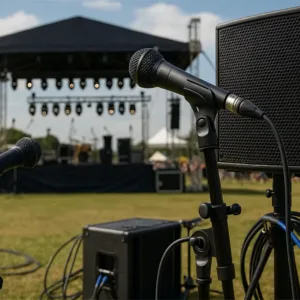
In live sound, XLR cable use shows up everywhere:
- Vocals and instruments → stage box or rack
- Stage outputs → FOH console
- Console outputs → system processor or amps → PA
- Talkback mics and some intercom paths
On U.S. tours and local shows, XLR cables:
- Get stepped on, rolled over by cases, and dragged across parking lots
- Are coiled and uncoiled several times a day
- Sit in freezing trucks and then get used in hot outdoor festivals
- Are pulled by tired stagehands who just need the stage cleared, now
So when rental companies talk about “tour-grade” XLR, they usually mean:
- Soft but tough jackets that stay flexible in the cold and don’t crack
- Braided shielding with high coverage for dimmers, LED walls, and RF clutter
- Metal shells and solid latches that don’t deform easily
- Real strain relief so pulls land on the jacket instead of the solder joints
In other words, real-world XLR cable use on tour is mostly a mechanical stress story. The cable either survives that lifestyle or it doesn’t.
XLR Cable Use in Recording Studios and Content Creation

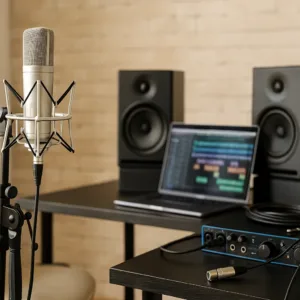
In studios and creator spaces, XLR cables are used for:
- Vocal mics, VO, podcast mics → interface or standalone preamp
- Long runs between live rooms or booths and the control room
- Analog inserts and outboard chains around the interface or mixer
Many creators start with USB mics. As they grow, they hit a few limits:
- They want more than one mic with separate gain and tracks.
- They want to move mics away from noisy PCs and power strips.
- They want to experiment with better preamps or analog gear.
At that point, XLR cable use becomes part of daily life. Balanced XLR lets them run longer distances with a low noise floor, and it gives them a path into pro-style gear without changing everything later.
For U.S. brands selling podcast kits or “starter studio” bundles, including a good XLR mic and a solid XLR cable is an easy way to avoid support emails that start with “there’s hum in my vocal” or “this cable already failed.”
XLR Cable Use in Installed AV Systems (Corporate, Education, House of Worship)

In fixed installations—offices, schools, churches, government rooms—XLR cables are often used for:
- Ceiling and table mics → DSP or matrix mixer
- Stage floor boxes and wall plates → AV rack
- Analog links between processors, amps, and recorders in the rack
Installed XLR cable use looks different from touring:
- The cable is pulled once through conduit or above a ceiling.
- It may be very long—dozens of meters or more.
- Cable jackets might need to meet local building and fire codes.
- The system is expected to run for years with only occasional service.
Integrators and consultants care about:
- Low capacitance per foot to avoid high-frequency loss over long runs
- Shielding and true balanced design so audio stays clean next to power and control wiring
- Correct jacket ratings and clear legending for inspectors and future technicians
Here, “install-grade” XLR doesn’t need to feel like a limp, touring-style cable. It needs to behave well in long, hidden runs, and it needs to be labeled in a way that makes sense five or ten years later when someone opens the rack again.
XLR Cable Use vs DMX – Avoiding the Common Lighting Mistake
Can You Use a Regular XLR Mic Cable for DMX Lighting?

A very common question in smaller venues and church rigs is:
“I have a box of XLR mic cables. Can I just use them for DMX?”
DMX512 is a digital control protocol based on RS-485. It expects a twisted pair cable with a characteristic impedance around 120 Ω (often called 110 Ω in audio circles) and with certain data-friendly properties.
Standard microphone cable isn’t designed around that number. If you run DMX over regular audio XLR lines, things might look okay on a short chain, but as distance and the number of fixtures grow, you may see:
- Random flickers
- Fixtures changing color or mode without being told
- Scenes freezing or behaving differently from one show to the next
For a one-off emergency, someone might use a short audio cable as a band-aid. But for any real show, production, or install, the safer rule is simple: use proper DMX cable for DMX.
Audio XLR Cable Use vs DMX Cable Use – Side-by-Side View
| Feature | Audio XLR Mic Cable | DMX512 Control Cable |
| Signal type | Analog balanced audio | Digital control data (DMX/RDM) |
| Typical impedance | Around 45–75 Ω, not tightly controlled | Around 110–120 Ω, designed to match DMX spec |
| Shielding | Braid and/or foil | Often braid + foil to protect data integrity |
| Common symptoms if misused | Hum, buzz, level drop | Flicker, random behavior, communication faults |
| Recommended U.S. usage | MIC/LINE audio paths | DMX lighting and compatible control runs |
For U.S. OEM and private-label brands, the cleanest approach is:
- Keep audio XLR and DMX as different SKUs, even if the connectors look similar.
- Print clear English text on the jacket:
- “MIC/LINE AUDIO CABLE”
- “DMX 110 Ω CONTROL CABLE”
- Explain the difference between XLR cable use for audio and cable use for DMX in product sheets and install guides.
Factories like Jingyi Audio that build both types can give brands one supplier for all their stage lines while still matching the right electrical specs for each role.
What Really Matters in XLR Cable Use – Lessons from Social Media and Field Failures
What Engineers Actually Complain About
If you scroll through Reddit, Gearspace, and similar communities, most posts about XLR cable use are not about “air” or “depth.” They’re about simple pain points:
- One channel crackles when the cable is touched.
- A cable that worked fine for a few weeks suddenly goes noisy.
- A plug sticks in a panel jack and nearly rips the connector out of the chassis.
When people run controlled tests on balanced cables, once the cables meet basic electrical specs, frequency response differences are usually tiny in the audio band. The big differences show up in:
- How long the cable lasts
- How often it gets noisy or intermittent
- How well it behaves around noisy power and lighting gear
So for real XLR cable use, the main questions are:
- “Does this cable stay solid and quiet over time?”
- “Does it stand up to the way people actually treat it?”
Common Failure Modes in Real-World XLR Cable Use
Based on both online stories and long-term OEM work, the same failure stories come up again and again:
- Weak strain relief
- The outer jacket isn’t clamped properly. Every pull lands on the solder joints.
- After enough yanks and bends, a conductor breaks right where it enters the connector.
Poor soldering or assembly
- Cold joints, overheated insulation, or sloppy wiring.
- The cable works on the bench, but goes intermittent when coiled, stepped on, or twisted.
Soft or out-of-spec pins
- Pins bend easily or don’t match the mating connector dimensions.
- Cables jam in panel jacks or lose good contact after a short time.
Compromised shielding
- Thin shield wires or spiral shields fail near the connector after repeated flexing.
- In rooms packed with LED walls, dimmers, radio mics, and Wi-Fi, hum and RF hash creep into the audio.
If you flip each of these around, you get a very practical design wishlist:
- Strong strain relief that really grips the jacket
- Consistent solder work and QC
- Stable, well-designed connector hardware
- Shield designs matched to how and where the cable will be used
XLR Cable Use from an OEM Perspective – Jingyi Audio’s Approach for U.S. B2B
Turning XLR Cable Use Patterns into Practical Design Rules
Jingyi Audio has been building pro-audio connectors and cables since the early 1990s. That includes XLR connectors, microphone cables, DMX cables, and custom harnesses for OEM/ODM customers in the U.S., Europe, and beyond.
Over the years, by watching how U.S. and European partners actually deploy products, we’ve turned XLR cable use patterns into design habits:
- Conductor design
- Choose strand count and gauge so tour cables feel flexible in the hand but still survive long-term bending and pulling.
- Shielding options
- Touring: braided shields with high coverage for noisy stages.
- Install: foil + drain wire to give full coverage in shared conduits.
- Sensitive runs: offer star-quad variants for better noise rejection in tough environments.
- Connector and strain relief
- Die-cast shells that handle knocks and also help with shielding.
- Latch designs that stay reliable after thousands of insertions.
- 360° strain relief parts that clamp the jacket all the way around.
Instead of talking only about “premium copper” or “gold plating,” we look at things you can measure:
- How many bend cycles does the cable survive before failure?
- How much pull can the strain relief handle before anything slips?
- How does contact resistance change after salt spray or humidity tests?
These numbers connect directly to how XLR cable use feels on a gig or in an install.
Geo-Targeted for the U.S. Market – Supply Chain, Compliance, and Branding
For U.S. OEM and private-label partners, location and paperwork matter almost as much as the cable design:
- Ningbo, China + Thailand plants
- Two factories give flexibility when tariffs or freight routes change.
- Orders can be planned around West Coast or East Coast ports and warehouse locations.
- Compliance and documentation
- Material choices are made with RoHS, REACH, and major retail requirements in mind.
- Install products can be delivered with the ratings and specs consultants ask for.
- U.S.-friendly customization
- English jacket printing with brand name, cable type, and length in both ft and m.
- Clear markings separating “MIC/LINE AUDIO,” “INSTALLED AUDIO,” and “DMX 110 Ω CONTROL CABLE.”
- Color rings or boots for channel numbering in touring and rental kits.
For a U.S. brand, a good XLR partner is one that understands pro audio, knows U.S. expectations, and is ready to make small details—like jacket print or carton labeling—work smoothly for your sales team.
Example Project – Designing a U.S. Tour-Grade XLR Mic Cable

Let’s take a simple example: a Los Angeles rental company wants a private-label “Tour-Grade XLR Mic Cable”.
- Use case
- Weekend tours, church events, small festivals, corporate shows.
- Frequent load-ins, load-outs, and rough handling.
Co-design with Jingyi Audio
- Jacket: soft feel, good abrasion resistance, stays flexible after cold truck storage.
- Shield: dense braid to handle noisy power and lighting rigs.
- Structure: optional star-quad version for key channels like lead vocal.
- Connectors: die-cast shells, reliable latch, full-wrap strain relief.
- Print: brand name + “TOUR-GRADE MIC CABLE” + length (25 ft / 50 ft / 100 ft).
Testing
- Bend tests that mimic repeated coiling and stepping.
- Pull tests to confirm the strain relief does its job.
- Environmental tests to see how contacts behave after humidity or salt spray.
Production and shipping
- Packed and labeled for quick counting and picking in a U.S. warehouse.
- Ongoing batches matched so repeat orders look and behave like the originals.
That kind of project turns messy, real-world XLR cable use into a product that stage crews will trust and re-order.
How to Choose the Right XLR Cable for Your Use Case (OEM & Integrator Checklist)
XLR Cable Use Checklist for U.S. OEM and Private-Label Brands
Here’s a straightforward way to spec XLR products for the U.S. market:
- Start with the usage scenario for XLR cable use
- Live / touring
- Studio / content creation
- Installed AV (meeting rooms, campuses, houses of worship)
- DMX / control (handled as its own product family)
Look at length and environment
- Under 25 ft → most decent pro cables work if assembled well.
- 25–100 ft → start caring more about capacitance, gauge, and shielding.
- Over 100 ft → low-capacitance cable and solid shielding become important.
Pick a shielding style
- Touring: flexible jacket + braided shield.
- Install: foil + drain wire for full coverage, often in shared conduit.
- Very sensitive runs: star-quad options for problem areas.
Select connector styles
- Straight vs right-angle as needed.
- Panel vs inline.
- Outdoor-friendly options where weather or moisture is a concern.
Confirm compliance and legending
- RoHS/REACH and any other regional requirements.
- English text on jacket for type and length.
- Clear marking that keeps DMX 110 Ω and MIC/LINE products separate at a glance.
Specs That Really Change How XLR Cables Behave in the Field
Some numbers on a data sheet directly shape real XLR cable use:
- Capacitance per meter/foot
- Lower capacitance keeps high frequencies in better shape over longer distances.
- Conductor gauge (AWG)
- Thicker copper gives better mechanical strength and lower resistance.
- Shield design and coverage
- Braided shields with high coverage do a better job rejecting hum and RF noise.
- Minimum bend radius and jacket blend
- Tells you how nicely the cable will coil and how long it’s likely to last under normal abuse.
- Operating temperature
- Matters for outdoor gigs, trucks, and warehouse storage, not just for “lab conditions.”
When these specs are tied to clear product families, U.S. engineers and buyers can match the numbers to the very real situations they see on stage, in racks, and in ceilings.
FAQ – Common Questions About XLR Cable Use
Q1: What is XLR cable used for in pro audio and installed sound?
XLR cables mainly carry balanced analog audio between mics, mixers, preamps, interfaces, processors, and amps. In installed AV systems, they are also used between ceiling or podium mics and DSPs, matrices, and amplifiers in racks.
Q2: How long can an XLR cable be before audio quality drops?
In most live and studio setups, runs of 100–150 ft (30–45 m) with decent cable and sensible gain staging are usually fine. If you need to go much farther, choose low-capacitance cable, keep source impedance low, and watch your overall noise and headroom.
Q3: Can I use an XLR mic cable for DMX lighting control?
It’s strongly discouraged for anything serious. DMX512 expects cable built around roughly 110–120 Ω impedance and data-friendly geometry. Audio XLR cables may sort of work on short, simple runs but can cause flickers and random glitches in longer or more complex setups. Use real DMX cable for DMX.
Q4: Do expensive XLR cables sound better than standard pro-grade cables?
Once two balanced cables meet reasonable electrical specs, any change in sound is usually very small, especially in normal working conditions. The big wins from better cables are: lower noise in tough environments, fewer intermittent faults, and fewer failures over time.
Q5: What should U.S. OEM brands look for in an XLR cable manufacturer?
Look for a factory that:
- Knows pro audio and has real projects under its belt
- Offers useful locations and capacity—like Jingyi Audio’s plants in Ningbo and Thailand
- Can provide RoHS/REACH and other compliance files
- Is willing to customize details for the U.S. market: jacket text, lengths, colors, packaging
- Can talk openly about mechanical tests, not just “premium” buzzwords
Q6: How is XLR cable use different between touring and installed AV?
Touring cables live a hard life: coiling, stepping, dragging, temperature swings. Flex and toughness matter most. Installed AV cables are pulled once and left in place, so long-term stability, jacket rating, and clean documentation matter more than extreme flexibility.
Q7: When should I use star-quad XLR cables?
Star-quad designs are helpful when you’re dealing with very low-level mics, very long runs, or harsh noise environments—like running near dimmer racks or LED walls. They can cut down on interference, at the cost of a bit more capacitance.
Citations & Further Reading
If you’d like to go deeper on some of the technical points:
- Balanced XLR cables explained (great overview of balanced vs unbalanced)
https://digilent.com/blog/balanced-xlr-cables-explained/ - What balanced XLR audio cables are and why people use them in studios and hi-fi systems
https://www.svsound.com/blogs/svs/what-are-balanced-xlr-audio-cables-svs-sound-experts-blog - XLR connector overview and pinout details
https://en.wikipedia.org/wiki/XLR_connector - DMX vs XLR microphone cable basics from a practical lighting point of view
https://hosatech.com/press-release/xlr-dmx/ - Jingyi Audio – Pro audio connectors & cables (OEM/ODM)
https://www.jingyiaudio.com
Conclusion – Building Reliable XLR Product Lines for 2025 and Beyond
Networked audio and wireless systems are growing fast, but XLR cable use still carries a huge chunk of the work in real-world rigs. Those cables connect mics, preamps, mixers, and speakers in the most sensitive parts of the system.
For U.S. OEMs, MI brands, and integrators, the path is pretty clear:
- Treat XLR cables as designed parts, not throw-ins.
- Match cable structure to actual use: touring, studio, or install.
- Keep audio XLR and DMX separated in both specs and labeling.
- Work with manufacturing partners who understand both pro audio and U.S. logistics.
Do that, and your cables quietly do their job while your brand gets the credit for a rig that “just works.”